.svg)


Are Mylar Bags Toxic? An Ultimate Guide To Safety, Materials, And Benefits
Mylar bags have gained a new standard in the world of food storage and beyond as they are being acclaimed to provide protection against oxygen, moisture, and light among others. However, as the safety of packaging is increasingly questioned, there is one question that is popping up again and again: Are Mylar bags toxic? This is our ultimate guide and provides explicit responses to the construction of Mylar bags.
We will walk.you through information such as polyethylene and biaxial films and the reason why the three-layered protective structure of custom mylar bags is superior to other flexible packaging mediums. Take the plunge to know about Mylar safety, recycling, oxygen absorbers, and the reasons why you should use the best Mylar, which is good for your product.
What Are Mylar Bags Made Of?
In their fundamental base, Mylar bags are made of BoPET (biaxially-oriented polyethylene terephthalate), which is a powerful, elastic film of polyester reinforced by making the film stretch in two directions during its production. This textile integrity provides high tensile power and puncture resistant power.
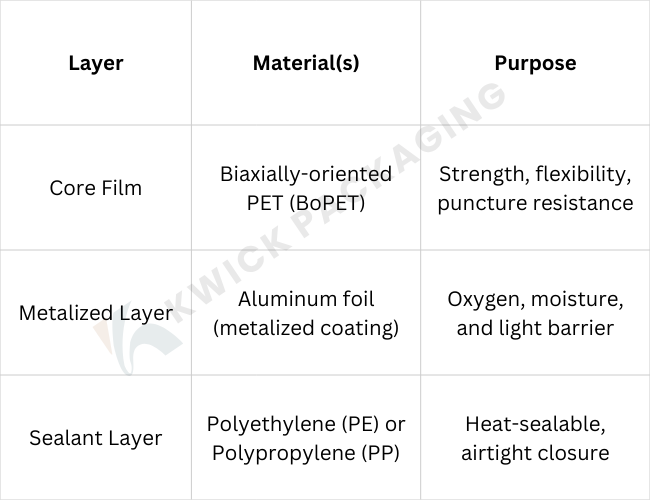
Mylar bags are designed with three layers in order to achieve maximum protection:
-
Base Polyester Film (BoPET)
This is the base, which offers high tensile strength, durability and flexibility.
-
Metalized Aluminum Layer
This consists of a thin foil that reflects light and serves to resist oxygen and moisture as the major food spoilers.
-
Sealant Layer (Polyethylene or Polypropylene)
It allows heat sealing of airtight closures that bar contaminants. This multi-layered construction has made Mylar bags extremely useful in keeping goods fresh and in terms of shelf life, much longer than other packages made of plastic or polyethylene.
-
Middle Layer Nylon
Nylon is a middle layer in Mylar bags and it has the effect of increasing the preservation of the foods. This biaxial-oriented nylon film has extraordinary puncture protection, which prevents physical damages of your food or supplies during manipulation and storage. Its low oxygen and moisture penetration ensure that there are no contaminants in it and that the contents remain fresh and nutritious over a long time.
The multi-layer protection is increased when the outer polyester (BoPET) and inner polyethylene layers are utilized with nylon because of its barrier and strength properties, and Mylar bags can be effectively used to protect objects over the long term, whereas the use of simpler plastic bags only is not advantageous.
Layer Composition Details are shown In The Given Table no.1:
Are Mylar Bags Toxic? Fact Check
Directly addressing the issue of toxicity: Mylar bags, particularly those approved by FDA to be used in contact with food are not toxic and are safe. They are free of BPA (Bisphenole A), Phthalates, and other dangerous plasticizers that are questioned in the packaging material. The polyester film, aluminum foil, and polyethylene layers are chemically stable, inert, and do not leak toxic elements to the dry foods under the recommended storage conditions.
Mylar can be safely stored by proper use that is by not using excessive heat or sharp objects in order to get the dry goods to store Mylar in a safe inert profile during the entire period of its existence.
Comparisons Of Mylar Film With Other Flexible Packaging Materials How Does Mylar Film Compare?
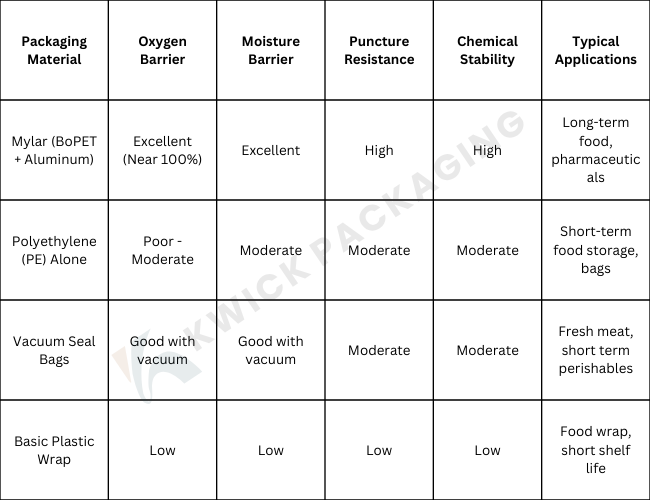
Single-layered flexible packaging materials such as polyethylene (PE) bags or vacuum-sealed bags or simple plastic wraps do not have the same multi-layer barrier capability as Mylar. Here's why Mylar outperforms:
-
Better Oxygen and Moisture Barrier
Mylar has a metalized layer of aluminum that blocks 100% of light and almost all oxygen and moisture, which contributes incredibly to increasing the shelf life of the product.
-
Improved Puncture Resistance
Biaxial orientation of polyester makes Mylar tensile properties significantly higher than those of single-layered plastics, and tears and punctures will no longer affect the freshness.
-
Chemical Stability
Mylar is a stable material, unlike other plastics that can degrade or outgas, chemically the compound is stable and does not pose a risk of chemical contamination.
-
Temperature Performance
Mylar has a higher heat sealing capacity because it does not deform under greater temperature to provide airtight seals of longer durations, thus lasting freshness.
See Table no.2 : Barrier and Material Comparison
What Are Mylar Bags Used For?
-
Mylar Bag Application is Extensive
Food storage: dry, freeze-dried, and dehydrated foodstuff such as grains, beans, nuts, coffee and powders.
-
Emergency and Survival Kits
Long lasting rations that are stored away in an environment-free environment.
-
Pharmaceuticals and Medical Devices
Preventing the exposure of sensitive products to moisture and contamination.
-
Consumer and Electronic Goods
Preservation of moisture sensitive electronics or cosmetics.
-
Industrial Exposures
Chemical powders and components that are not resistant to being exposed to the atmosphere. Mylar bags are valued in several industries due to the unmatched protective property of the bags.
Are Mylar Bags Recyclable?
Are mylar bags recyclable? The composite properties of Mylar film and aluminum foil make it difficult to recycle. This type of multilayer films can be very difficult to recycle through standard municipal recycling programs, and in such cases, the facilities need special equipment to separate the metals and plastics.
Nevertheless, Mylar can be recycled in some commercial recycling facilities and efforts are underway to enhance recyclability. To dispose of it sustainably, make sure to review the local recycling rules or reuse die-cut mylar bags by upcycling them and using them to craft or store items.
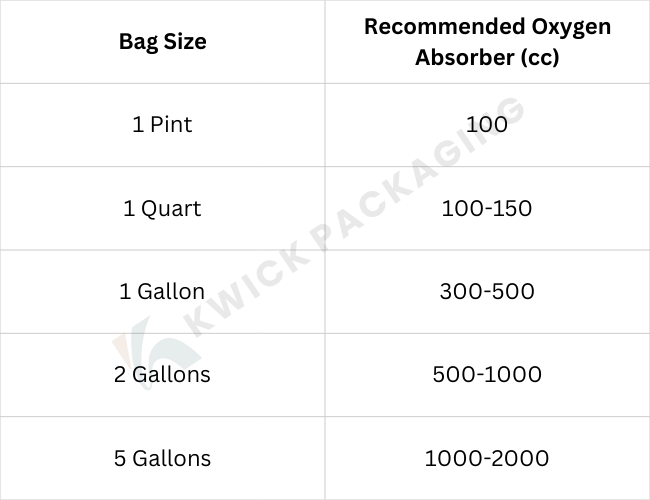
The correct size of oxygen absorbers will guarantee the full elimination of oxygen without leaving out any gas that will encourage corrosion. Kwick Packaging recommends adhering to the instructions of manufacturers adapted to the type of product and the volume of the packaging.
What Is Mylar And What Is It To Do With Food Preservation?
Mylar bags with layers of biaxial PET, aluminum foil, and secure polyethylene sealants are the most advanced option to maintain the freshness of the food among other things. Their known capability in preserving degrading factors gives them decades of goods instead of months and enables them to be by far superior to the common polyethylene or vacuum bags.
Mylar bags by Kwick Packaging combine the latest materials science and fine manufacturing to create a packaging that is of high quality in terms of food-safety. This causes safe, dependable and extended preservation of delicate and perishable products.
Conclusion
Are Mylar bags toxic? No, at Kwick Packaging we have safe and FDA compliant Mylar bags that are properly prepared using stable, food grade materials that are highly chemical inert. Their structure of three layers is unique in shielding the contents against oxygen, moisture and light much better than other flexible packaging materials.
The reason why mylar are chosen is long shelf life, less spoilage, and uncompromising safety of the product. Because with the help of accurate oxygen absorber application and selective packaging, mylar bags preserve freshness in years and have wide applications in food, pharmaceutical and commercial areas. Mylar is the best when it comes to the highest level of packaging safety and functionality.