.svg)

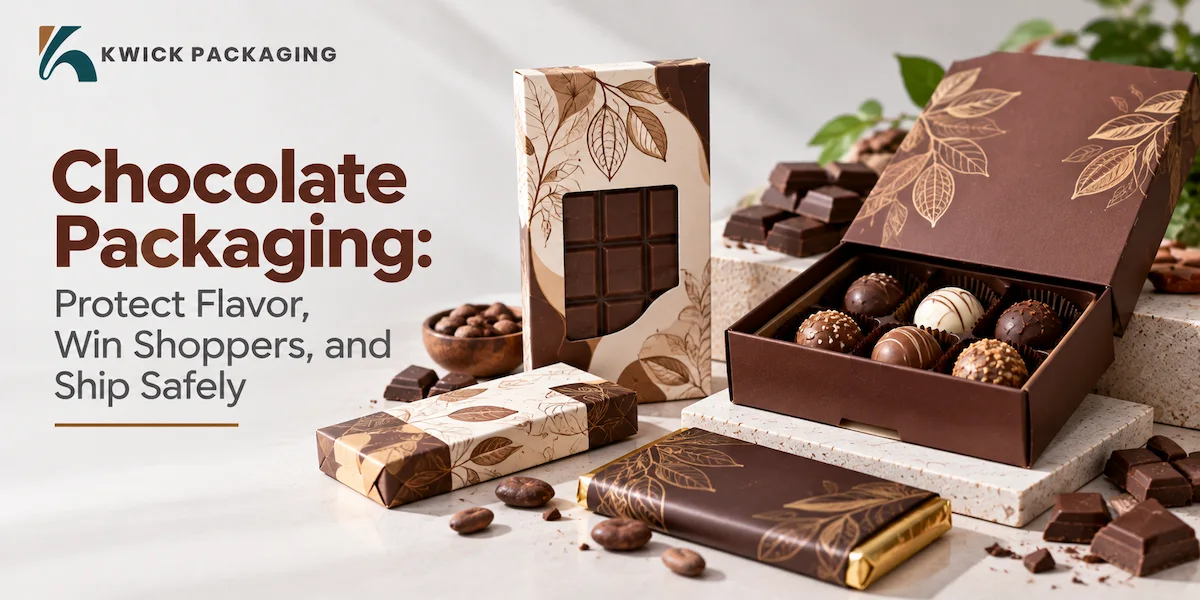
Chocolate is a sensitive product. It melts in a warm van, it absorbs the smell that is around it and takes its glow after a few bad weeks. These are most of the problems solved by chocolate packaging, and it also sells the product before people even try it. This guide goes through the primary options in simple terms, choosing numbers to check.
Why is the packaging of chocolate so important?
The market for chocolate is huge and over $120 billion annually, and no one's feet are empty. Shoppers move fast. When it comes to packaging, a majority of buyers say that it influences their purchase decision and make that decision in just a few seconds, as is reported in packaging surveys. A worn out box doesn't beat a new box no matter how good the chocolate is.
A good package accomplishes three tasks. It safeguards the product, conveys the brand message and complies with the law. A strong package has been able to cover all three and a weak package does not help the others.
How Does Chocolate Keep Itself Fresh In Packages?
Heat and Humidity
Cocoa butter starts to get soft when the temperature's just a little bit lower than body temperature. Normal conditions for storing chocolate include a humidity level below 55 percent and a temperature, between 15 degrees Celsius and 18 degrees Celsius. Layers of foil and cool packs help to reduce the heat when chocolate is being shipped during the summer.
Smell, Ink and Glue
Cocoa butter has a tendency to absorb odors such as a sponge. Newly printed cards often leave an ink flavor or the taste of the glue used. Select materials meeting food contact regulations and request written certification from suppliers.
Shock and Pressure
Bars crack and bonbons bust on the way. Each piece is secured with trays, dividers and paper cushions. A snug insert helps to reduce movement, which translates to reduced broken coatings and reduced refunds.
Typically, strong designs are based on two layers. The moisture and air-proof inner foil or metallized film is covered by an outer shell made of paperboard, rigid board or tin that provides shape and strength. Brands that take this route tend to discover that packaging chocolate products in two layers is somewhat more expensive, but results in fewer losses due to damage.
Package looks worth the price
Dark brown and gold indicate dark rich bars. Soft Pastels suggest a milk or fruit taste. Soft touch coating is smooth and foil stamping catches the light to add a touch to the look. A small window reveals the product and therefore assists in developing trust with the shoppers.
Gifts matter too.
Choose Custom Chocolate Packaging
Custom chocolate packaging is tailored to your product. The size, the shape of the tray, the print and the finish are yours so a square truffle is not rattling around in some stock box, but is a square shape in a square hole. A flat template and digital proof will be sent by many suppliers, such as Kwick Packaging, so that you can see if they fit before the full print run begins.
Label(s) Does the Law Prescribe:
Different countries have different rules. Check with your local food authority. Typically, these are the items a box will require in the USA:
- The name of the product, e.g., Dark Chocolate Truffles
- Net Weight in ounces and grams
- The manufacturer/distributor name and address.
- A comprehensive list of ingredients containing allergens listed clearly.
- A code for tracking a batch or lot of a product.
Know before purchasing chocolate packaging wholesale
Once orders come to a few thousand racks of chocolate packaging, the price per box does drop, usually 20-40%. You have to compromise between the storage space and cash upfront, but ensure that they are aligned with your actual sales prediction. Look at the minimum order quantity before getting attached to a design.
Make a schedule also. Printing and production generally takes 2-6 weeks followed by shipping. Make preparations for at least 3 months in advance for the event of Valentine's Day. Request a sample from Kwick Packaging or any other supplier, and then try it out by sending it in the summer heat. If the box can make it through a hot week on the way, it can make it through most shelves.
Is there chocolate packaging that can be eco-friendly?
Yes, and customers see it. More than 50% of buyers state that they like the idea of packaging that can be recycled in surveys on a regular basis. Chocolate packaging can become complicated here as foil and plastic films offer good moisture protection, but are less easy to recycle. Brands are addressing this issue by using paper-based barriers, one material wraps, recycled paperboard, and water-based inks. Paper and paperboard are recovered at roughly 68% and corrugated board over 90% in the US, making it easy to fit into existing recycling streams.
Final Thoughts
Chocolate is sold by taste, but packaging determines if anyone will get a taste. A good box will keep cocoa butter cool. It also demonstrates your style and conforms to the requirements of the label in your market. Don't think of the selection as an add-on, but rather as a component of the product.
Start small. Test out a sample, double-check labels and consult with the supplier before ordering a large quantity. Smart chocolate packaging comes with an initial effort but delivers the benefits of better margins and a better brand presence on the shelf.
FAQs
- Which material will make a better wrapping for chocolate?
The inner layer should be aluminum foil or metallized film as these materials will prevent moisture, air and odors from getting in. Place paperboard, rigid board or tin for strength around the outside.
- Why does chocolate go white after it's been heated?
The whiteness is due to bloom. Fat bloom occurs when temperatures change and sugar bloom occurs if moisture comes into contact with the surface. They can all be eaten but are unattractive.
- Is there a need for food safe materials in each layer?
For components that come in contact with the chocolate, use food-grade materials. The outer layers must be protected from strong odors as well, with safe inks and adhesives.
- How long will packaging order take?
Typically, production takes 2-6 weeks after placing your order plus shipping time. Buy in advance during busy seasons such as Valentine's Day and Winter Holidays.
- What is the price of a chocolate box?
Environmentally friendly prices are subject to size, material, finish and quantity. Printed paperboard boxes can cost less than $1 per unit in a large quantity, and rigid gift boxes can run into many dollars.